
Frank Nyathi
Head: Service and Mechanics at Vehix · 2 November 2025 · 7 min read · Updated 14 August 2026
Stopping safely is non-negotiable. The good news is that most brake problems give you warning signs long before they become dangerous — if you know what to listen for. This guide walks through how the system works, what to check, and the numbers we use in the workshop when deciding whether a brake still has life left in it.
How Your Brakes Work
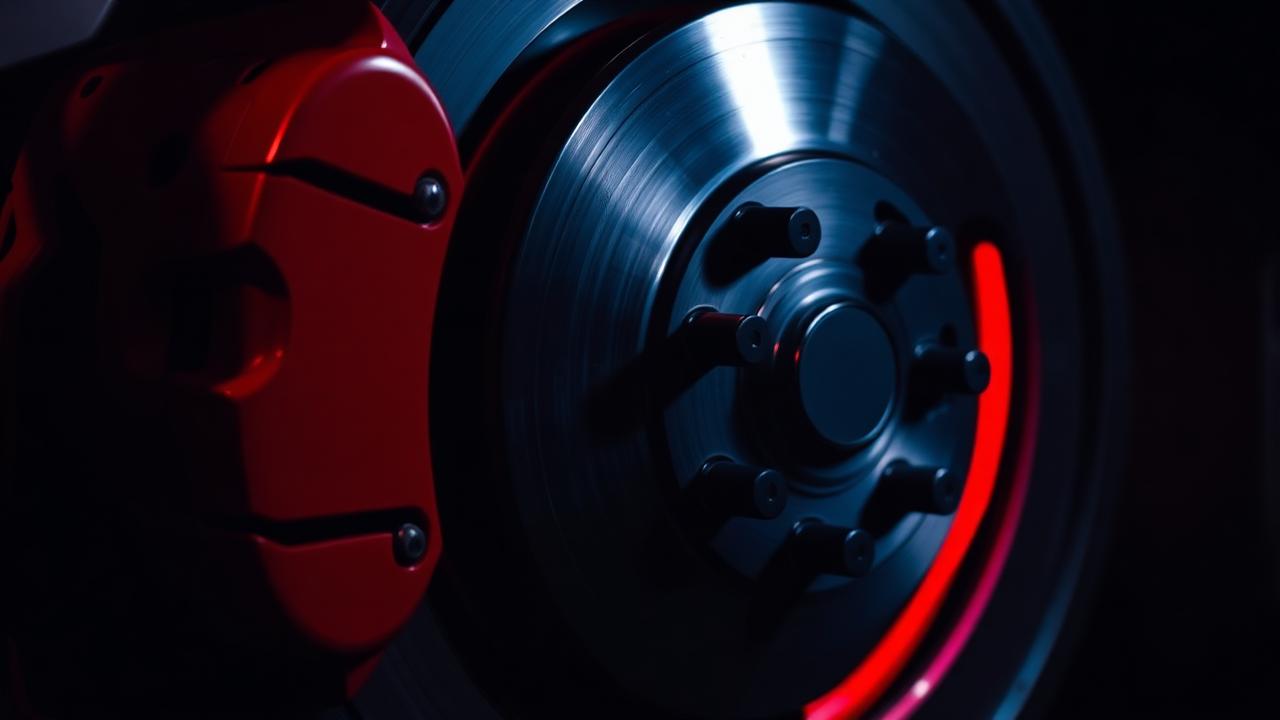
When you press the pedal, a master cylinder pushes hydraulic fluid down steel lines and rubber hoses to a calliper at each wheel. The calliper piston squeezes two brake pads against a spinning metal disc, and friction turns your car's momentum into heat — a hard stop from 120 km/h can take a front disc past 400°C. Everything else is support: the ABS unit pulses pressure so the wheels keep turning under emergency braking, and the brake booster uses engine vacuum so your leg does not have to do all the work. Because it is a sealed hydraulic system, a small leak or air bubble changes how the pedal feels straight away.
What are the warning signs of failing brakes?
Brakes fail gradually and noisily. A high squeal usually means the built-in wear indicator on the pad is touching the disc — you have weeks, not months. A deep grinding noise means the friction material is gone and metal is cutting into the disc, which turns a pad job into a pad-and-disc job. A pedal that sinks slowly under your foot at a robot points to fluid loss or a failing master cylinder. Pulling to one side is usually a sticking calliper or slide pin, common on cars that stand for long periods. Vibration through the pedal points to a warped or unevenly worn disc.
- Squealing or grinding when you brake
- Pedal feels soft or sinks to the floor
- Car pulls to one side when braking
- Vibration through the pedal or steering
- Brake or ABS warning light on
- Longer stopping distance than usual
What's Included in a Vehix Brake Inspection
A proper brake inspection means the wheels come off — you cannot judge a brake through a rim. We measure pad thickness with a gauge, and measure disc thickness against the minimum figure stamped on the disc itself, checking for lip wear and run-out. We work each calliper piston and slide pin to make sure it moves freely, inspect the flexible hoses for cracks or bulging, look for fluid weeping at unions, and test the brake fluid for moisture content with a meter. The handbrake travel and rear shoes get checked too. The whole inspection takes about 30 minutes and you get honest measurements, not guesswork.
- Pad thickness measurement
- Disc/rotor measurement for wear and warping
- Calliper operation check
- Hose and line inspection for cracks
- Brake fluid moisture and condition test
How often should brake fluid be replaced?
Brake fluid is hygroscopic, which means it pulls water out of the air through the hoses and reservoir. Water lowers the boiling point, so fluid that boils at around 230°C when new can drop below 160°C once it holds about 3% moisture. Boiling fluid creates vapour, and vapour compresses — that is the long, spongy pedal people notice on a mountain pass or after repeated hard stops. Water also corrodes ABS valves and calliper bores from the inside, which is an expensive failure. We recommend a full flush every two years regardless of mileage, using the DOT specification printed on your reservoir cap.
Brakes and Suspension Are Linked
Brakes do not work in isolation. Under braking, weight shifts forward onto the front axle, and it is the shock absorbers that control how fast and how far that happens. Worn shocks let the nose dive, which overloads the front pads, unloads the rear brakes and stretches your stopping distance — on a wet Vanderbijlpark road that can add several car lengths. Tired shocks also allow the tyre to skip on rough tar, which confuses the ABS into releasing pressure early. Add worn bushes or a loose wheel bearing and you get vibration under braking that gets blamed on the discs. That is why every brake inspection we do includes a suspension check.
Vanderbijlpark Driving Conditions
Local conditions are hard on brakes. Stop-start traffic on Frikkie Meyer and around the malls means constant low-speed braking that glazes pads and cooks fluid. Summer heat above 30°C leaves less margin before the fluid gets close to its boiling point. Gravel shortcuts throw grit and dust into the pad-and-disc gap, which acts like sandpaper on the friction surface, and rain turns that dust into a paste that scores discs. Highway commutes to Joburg add high-speed stops that put much more energy through the system than town driving. Realistically, expect faster wear here than a manufacturer's average figure suggests.
What are the most common brake myths?
Plenty of confident advice about brakes is simply wrong, and some of it is dangerous. Discs and pads are separate wear items measured separately — a disc below its minimum thickness cannot dissipate heat properly and will crack or warp, even with new pads on it. Brake fluid is not generic either: mixing DOT 5 silicone fluid into a DOT 4 system, or topping up with old fluid from a half-open bottle, causes real problems. And noise is information, not a nuisance. The wear indicator was designed to squeal, so silencing it with spray or ignoring it defeats a built-in safety feature.
- Myth: discs only need replacing when pads do — false, they're measured separately
- Myth: all brake fluids are the same — false, DOT spec matters
- Myth: squealing is harmless — false, it usually means pads are worn
When should you replace brake pads and discs?
Pads start life around 10 to 12 mm of friction material. We advise replacement at 3 mm and treat anything under 2 mm as urgent, because below that the backing plate can contact the disc. Discs carry a minimum thickness figure stamped or cast into the hub face; once measurement reaches that number, or the disc is warped, deeply scored or has a pronounced outer lip, it gets replaced rather than skimmed. Always replace pads in axle sets so braking stays balanced left to right. Typical pad life is 40,000 to 60,000 km, but heavy town driving or towing can halve that, and a fitted pad job usually takes one to two hours per axle.
Concerned about your brakes? Book a brake check at Vehix — MIWA registered workshop.
Book at Vehix →Frequently Asked Questions
Tags
Frank Nyathi
Head: Service and Mechanics at Vehix
Frank founded Vehix in 2017 and leads the workshop with hands-on experience across petrol and diesel vehicles, specialising in engine diagnostics, drivetrain repair and honest customer service.